Vaults is the Ultimate Solution for Automated Yield Optimization in DeFi

In the rapidly evolving world of decentralized finance, Vaults have emerged as one of the most powerful tools for cryptocurrency investors seeking to maximize their returns without constant manual intervention. Vaults represent a sophisticated approach to yield farming that combines automation, compound interest strategies, and smart contract technology to help users grow their digital assets efficiently.

Understanding What Vaults Are and How They Work

Vaults function as automated investment vehicles within the decentralized finance ecosystem. When users deposit their cryptocurrency tokens into Vaults, sophisticated smart contracts take over the management of those assets. These Vaults automatically execute complex yield farming strategies that would otherwise require significant time, knowledge, and gas fees if performed manually by individual investors.

The fundamental principle behind Vaults is the concept of auto-compounding. Traditional yield farming requires users to regularly harvest their rewards and manually reinvest them to benefit from compound interest. Vaults eliminate this tedious process by automatically reinvesting earned rewards back into the underlying strategy, ensuring that users benefit from exponential growth potential without lifting a finger.

The Technical Architecture of Vaults

At their core, Vaults operate through carefully audited smart contracts deployed on blockchain networks. These contracts contain predefined strategies that determine how deposited funds are utilized across various DeFi protocols. When you interact with Vaults, you receive vault tokens that represent your proportional share of the total assets held within that particular vault.

The smart contracts powering Vaults continuously monitor market conditions and execute transactions at optimal times. This includes harvesting yield farming rewards, swapping tokens when necessary, and reinvesting proceeds to maximize the annual percentage yield for all participants in the Vaults.

Key Benefits of Using Vaults for Yield Optimization

The advantages of utilizing Vaults extend far beyond simple convenience. Vaults offer numerous benefits that make them attractive to both novice and experienced DeFi participants seeking efficient ways to grow their cryptocurrency holdings.

Gas Fee Optimization Through Vaults

One of the most significant advantages of Vaults is the socialization of gas costs. When individual users attempt to compound their yields manually, they must pay transaction fees for each harvest and reinvestment action. Vaults pool resources from multiple users, spreading these costs across all participants. This means that even small depositors in Vaults can benefit from frequent compounding that would otherwise be economically unfeasible for them individually.

Time Efficiency and Passive Income Generation

Vaults transform the labor-intensive process of yield farming into a truly passive income stream. Instead of monitoring multiple protocols, tracking reward schedules, and executing transactions at optimal times, users simply deposit into Vaults and allow the automated systems to handle everything. This time-saving aspect of Vaults makes advanced DeFi strategies accessible to users who cannot dedicate hours daily to managing their investments.

Professional Strategy Implementation

The strategies implemented within Vaults are typically designed by experienced DeFi developers and strategists who understand the intricacies of various protocols. By depositing into Vaults, regular users gain access to sophisticated yield optimization techniques that leverage deep knowledge of liquidity mining programs, token economics, and cross-protocol opportunities.

Different Types of Vaults Available in DeFi

The DeFi ecosystem offers various categories of Vaults, each designed to serve different investment objectives and risk tolerances. Understanding these different Vaults types helps investors choose the most appropriate options for their portfolios.

Single Asset Vaults

Single asset Vaults allow users to deposit a single cryptocurrency token and earn yield without exposure to impermanent loss risks associated with liquidity provision. These Vaults typically generate returns through lending protocols, staking mechanisms, or other single-sided yield opportunities. Single asset Vaults are particularly popular among users who want to accumulate more of a specific token they believe in long-term.

Liquidity Provider Vaults

LP Vaults accept liquidity provider tokens from decentralized exchanges and automatically compound the trading fees and liquidity mining rewards earned by those positions. These Vaults offer potentially higher yields than single asset alternatives but come with the inherent risks of providing liquidity, including impermanent loss. LP Vaults are ideal for users who are already committed to providing liquidity and want to maximize their returns from that activity.

Stablecoin Vaults

For users seeking lower volatility options, stablecoin Vaults provide yield optimization on stable assets like USDC, USDT, or DAI. These Vaults generate returns through lending protocols and stablecoin-specific yield farming opportunities. While the yields from stablecoin Vaults may be lower than more volatile alternatives, they offer a way to earn passive income without exposure to cryptocurrency price fluctuations.

How to Choose the Right Vaults for Your Investment Goals

Selecting appropriate Vaults requires careful consideration of multiple factors including risk tolerance, investment timeline, and yield expectations. Making informed decisions about which Vaults to use can significantly impact your overall DeFi experience and returns.

Evaluating Vault Security and Audit Status

Before depositing funds into any Vaults, investors should research the security measures in place. Reputable Vaults undergo thorough smart contract audits by recognized security firms. Additionally, examining the track record of the team behind the Vaults and their history of handling any security incidents provides valuable insight into the reliability of the platform.

Understanding Vault Fees and Their Impact

Most Vaults charge fees for their services, typically including performance fees on generated yields and sometimes deposit or withdrawal fees. While Vaults fees reduce overall returns, they fund ongoing development, security measures, and the operational costs of running auto-compounding strategies. Comparing fee structures across different Vaults helps users find the most cost-effective options for their needs.

Assessing Risk Levels of Different Vaults

Different Vaults carry varying levels of risk based on their underlying strategies. Vaults that interact with newer or less established protocols may offer higher yields but come with increased smart contract risk. Conservative investors might prefer Vaults that utilize battle-tested protocols, while risk-tolerant users might explore higher-yield Vaults with newer strategies.

The Role of Vaults in the Broader DeFi Ecosystem

Vaults play a crucial role in the decentralized finance landscape beyond individual yield optimization. These automated investment vehicles contribute to overall ecosystem health and efficiency in several important ways.

Liquidity Distribution and Protocol Support

When Vaults deploy capital across various DeFi protocols, they help distribute liquidity throughout the ecosystem. This liquidity is essential for the functioning of decentralized exchanges, lending platforms, and other DeFi applications. Vaults effectively act as aggregators that channel user funds to where they can be most productively utilized.

Democratizing Access to Advanced Strategies

Before Vaults became widespread, sophisticated yield farming strategies were primarily accessible to wealthy investors who could afford the gas costs and technical expertise required. Vaults have democratized access to these opportunities, allowing users with smaller portfolios to benefit from the same strategies employed by DeFi whales.

Best Practices for Using Vaults Safely

While Vaults offer tremendous benefits, users should follow certain best practices to minimize risks and maximize their experience with these automated yield optimization tools.

Diversification Across Multiple Vaults

Rather than concentrating all funds in a single vault, spreading deposits across multiple Vaults reduces exposure to any single point of failure. This diversification strategy applies both to using Vaults on different platforms and selecting Vaults with different underlying strategies and assets.

Regular Monitoring and Portfolio Rebalancing

Although Vaults automate the compounding process, users should still periodically review their positions. Market conditions change, new Vaults opportunities emerge, and existing Vaults strategies may become less optimal over time. Regular assessment ensures your capital remains deployed in the most effective Vaults for current market conditions.

Understanding Withdrawal Processes

Before depositing into Vaults, users should understand the withdrawal mechanics. Some Vaults may have lock-up periods or withdrawal fees that affect liquidity. Knowing these details in advance prevents surprises when you need to access your funds.

The Future of Vaults Technology

As decentralized finance continues to mature, Vaults technology is expected to evolve with increasingly sophisticated features and capabilities. The future of Vaults looks promising with several developments on the horizon.

Cross-Chain Vaults Integration

With the growth of multiple blockchain ecosystems, future Vaults may seamlessly operate across different chains, automatically moving funds to wherever the best yields exist regardless of the underlying blockchain. This cross-chain capability would significantly expand the opportunity set available to Vaults users.

AI-Enhanced Vault Strategies

Artificial intelligence and machine learning could enhance Vaults by enabling more dynamic strategy adjustments based on real-time market analysis. These intelligent Vaults would adapt their approaches more rapidly than current rule-based systems, potentially capturing opportunities that static strategies miss.

In conclusion, Vaults represent one of the most significant innovations in decentralized finance, offering users a powerful way to optimize their cryptocurrency yields through automation and professional strategy implementation. Whether you are new to DeFi or an experienced yield farmer, understanding and utilizing Vaults can substantially improve your investment outcomes while reducing the time and effort required to manage your digital asset portfolio.

Search on Youtube!

My Vaults provides valuable tools for multi-Vault domains and cross-domain users, enabling you to find documents more quickly and see open tasks across your Vaults. This feature is sometimes called “Enterprise Home.” My Vaults must be enabled by an Admin .

You cannot access the Help link under the user name menu from My Vaults . To open the Help & Support page, first click into a specific Vault.

How to Access My Vaults

When you log in, My Vaults opens by default. From within a specific Vault, you can navigate to My Vaults using the Vault selector that appears in the top header area. If you have access to Vaults across domains, Vault displays all Vaults across all domains as well as the name of the domain they belong to.
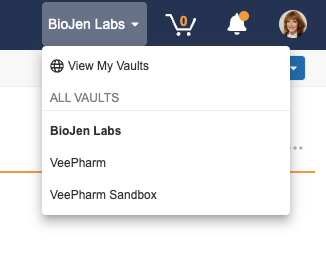
My Vaults menu

If you are logged into a sandbox Vault, it will have a green banner to help you distinguish between your sandbox and production Vaults. Learn more about Administering Sandbox Vaults .

Tasks & Workflows View

Within My Vaults , you can see assigned tasks and active workflows across Vaults. You can choose between grid view (default) or card view using the view icons in the upper right corner. In grid view, you can see a paginated table of all of your Vaults with columns for Vault Name, Last Login, Application Family, Type, Domain, and My Tasks. Additional product-specific product family columns may appear next to the Vault column if you have a Vault membership in certain product families. See the application-specific documentation for more information. In the card view, you see a chart for each Vault of your assigned tasks and their status, as well as the number of available tasks and active workflows. In this view, you can also see the domain name, the time you last accessed each Vault, as well as the application type. Open a specific Vault by clicking various places within the page . From the search results, you can navigate back to the task and workflow view with the Back to My Vaults link.

How to Search Across Vaults

When you search from My Vaults , results include documents in all Vaults to which you have access, including Vaults across domains. Cross-Vault search is convenient when you aren’t sure which Vault a document resides in, or when you want an across-the-board view of all documents matching certain criteria. Headings separate results from each Vault and you can filter documents by Vault from the left panel. If you have access to Vaults across domains, you can filter the search results to display both home and cross-domain Vaults.

From My Vaults , you can click various links to navigate to specific areas within a Vault.

In the task and workflow view:

  • The headings that appear above each Vault’s status direct users to the Home > My Tasks view.
  • The assigned tasks count and graphic navigate users to the Home > My Tasks view.

In the search results view:

  • The Vault headings navigate users to the Library > Recent Documents view.
  • The View all results link opens the search results for a specific Vault.
  • The document name links open the Doc Info page directly.

View, Sort, & Favorites

You can choose different view and sort options in the My Vaults page using the drop-down lists beneath the My Vaults header. The options you select will persist throughout your session, but not into any future sessions.

View Options

In card view, you have the following view options for My Vaults:

  • All My Vaults (default) shows all Vaults that you can access. This option always appears first in the drop-down list.
  • {domain.com} shows all Vaults associated with the selected domain. All domains in which you have access to a Vault appear in the drop-down list in alphabetical order.
  • My Favorites shows only Vaults starred as favorites. This option is always listed last in the drop-down list.

These view options are not available in grid view. Instead, if you have access to more than 25 Vaults, you can filter the Vaults that are displayed by any column except for Vault Name, Last Login, and My Tasks.

Sort Options

In grid view, you can sort by any column except My Tasks. In card view, you have the following sort options:

  • Vault Name sorts all Vaults alphabetically by name.
  • Vault Domain sorts all Vaults alphabetically by the domain name.
  • Last Login Time sorts all Vaults by your most recent login time.
  • Delegated Vaults sorts by Vaults you have delegated access to.

Favorites

In card view, each Vault tile displays a star button next to the Vault name. Click the star to mark the Vault as a personal favorite. To remove it from your favorites, click the star again.

Hover Views

You can hover over the following UI elements for additional information:

  • Delegate icon for Vaults to which you have delegated access (to the left of the Vault Name in grid view or in the upper right corner of the Vault’s card in card view): The information displayed depends upon how your Vault’s configuration, but may include information such as the first and last name, email address, and title of the user who delegated your access.
  • My Tasks: Displays a breakdown of overdue, coming due, and on schedule tasks.

Vault Status

When a Vault is unavailable (Vault in maintenance or configuration mode), it is grayed out and unclickable. In grid view, you can hover over the grayed out Vault name for details on its status.