Vaults is the Ultimate DeFi Solution for Passive Crypto Income

In the rapidly evolving world of decentralized finance, Vaults have emerged as one of the most powerful tools for cryptocurrency investors seeking to maximize their returns without constant manual intervention. Vaults represent a sophisticated approach to yield optimization that has revolutionized how users interact with DeFi protocols across multiple blockchain networks.

Understanding What Vaults Are in Decentralized Finance

Vaults are automated smart contract systems designed to optimize yield farming strategies on behalf of users. When you deposit your cryptocurrency assets into Vaults, these intelligent protocols automatically compound your earnings, reinvest rewards, and execute complex strategies that would otherwise require significant time and technical expertise. The beauty of Vaults lies in their ability to democratize access to advanced DeFi strategies that were previously available only to sophisticated traders and large institutional players.

The fundamental concept behind Vaults is remarkably elegant. Users deposit their tokens into a Vault, and the smart contract takes over from there. Vaults continuously monitor market conditions, harvest rewards from various liquidity pools, and reinvest those earnings to generate compound interest. This automated approach ensures that your assets are always working at maximum efficiency, even while you sleep.

How Vaults Work: The Technical Foundation

Smart Contract Architecture

Vaults operate through carefully audited smart contracts that execute predefined strategies without human intervention. These contracts are programmed to interact with various DeFi protocols, automatically claiming rewards, swapping tokens, and redepositing assets to maximize returns. The transparent nature of blockchain technology means that every action taken by Vaults can be verified on-chain, providing users with complete visibility into how their funds are being managed.

Auto-Compounding Mechanisms

One of the most valuable features of Vaults is their auto-compounding capability. Traditional yield farming requires users to manually harvest rewards and reinvest them, a process that can be time-consuming and costly in terms of gas fees. Vaults eliminate this burden by automatically performing these operations at optimal intervals. By pooling resources from multiple users, Vaults can compound more frequently while distributing gas costs across all participants, making the process significantly more cost-effective.

Strategy Optimization

Advanced Vaults employ sophisticated algorithms to determine the best times to harvest and reinvest. These strategies take into account factors such as gas prices, reward accumulation rates, and market conditions. Some Vaults even implement dynamic strategies that can adapt to changing market conditions, switching between different yield sources to maximize returns while managing risk.

Benefits of Using Vaults for Cryptocurrency Investment

Passive Income Generation

The primary advantage of Vaults is their ability to generate truly passive income. Once you deposit your assets, Vaults handle everything else automatically. This hands-off approach is particularly appealing to investors who want exposure to DeFi yields without dedicating hours each day to managing their positions. Vaults transform complex DeFi strategies into simple deposit-and-earn opportunities.

Gas Fee Optimization

Individual yield farmers often find that gas fees eat significantly into their profits, especially during periods of network congestion. Vaults solve this problem by batching transactions and sharing costs among all depositors. When Vaults harvest rewards for thousands of users simultaneously, the per-user cost becomes negligible. This efficiency makes Vaults particularly attractive for smaller investors who might otherwise be priced out of profitable farming opportunities.

Professional Strategy Execution

Vaults are typically developed by experienced DeFi teams who understand the intricacies of yield optimization. By using Vaults, individual investors gain access to professional-grade strategies without needing to develop their own expertise. The teams behind Vaults continuously monitor and update their strategies to ensure optimal performance in changing market conditions.

Time Savings

Managing yield farming positions manually requires constant attention. Users must monitor reward accumulation, calculate optimal harvest times, execute multiple transactions, and stay informed about new opportunities. Vaults automate all of these tasks, freeing users to focus on other aspects of their investment strategy or simply enjoy their lives without being tied to their screens.

Types of Vaults Available in DeFi

Single Asset Vaults

Single asset Vaults allow users to deposit a single cryptocurrency and earn yield without exposure to impermanent loss. These Vaults typically stake assets in lending protocols or single-sided staking pools. Single asset Vaults are ideal for investors who want to accumulate more of a specific token they believe in long-term.

Liquidity Provider Vaults

LP Vaults accept liquidity provider tokens from decentralized exchanges. These Vaults farm rewards from liquidity mining programs and automatically compound them back into more LP tokens. While LP Vaults often offer higher yields than single asset options, they do carry impermanent loss risk that users should understand before depositing.

Stablecoin Vaults

For risk-averse investors, stablecoin Vaults provide an attractive option. These Vaults deploy stablecoins across various lending and yield farming protocols to generate returns without exposure to cryptocurrency price volatility. Stablecoin Vaults are particularly popular among users seeking predictable income streams.

Multi-Strategy Vaults

Some advanced Vaults employ multiple strategies simultaneously or switch between strategies based on market conditions. These multi-strategy Vaults aim to optimize returns across various market environments while managing risk through diversification.

Risk Considerations When Using Vaults

Smart Contract Risk

Like all DeFi applications, Vaults are subject to smart contract risk. Bugs or vulnerabilities in the code could potentially lead to loss of funds. Reputable Vaults undergo thorough security audits, but no smart contract can be guaranteed to be completely free of vulnerabilities. Users should research the security measures implemented by Vaults before depositing significant funds.

Protocol Risk

Vaults interact with underlying DeFi protocols, meaning they inherit the risks of those protocols. If a lending platform or decentralized exchange that Vaults rely on experiences issues, the Vaults themselves may be affected. Diversifying across multiple Vaults can help mitigate this risk.

Market Risk

While Vaults optimize yields, they cannot protect against broader market downturns. The value of assets deposited in Vaults can still decrease due to price movements. Users should consider their overall risk tolerance and investment timeline when allocating funds to Vaults.

Choosing the Right Vaults for Your Investment Goals

Evaluating APY and Performance

When comparing Vaults, annual percentage yield is often the first metric investors examine. However, it is important to understand that APY figures can fluctuate based on market conditions, token prices, and participation levels. Historical performance data for Vaults can provide insight into consistency and reliability over time.

Assessing Security and Audits

Security should be a top priority when selecting Vaults. Look for Vaults that have undergone multiple independent security audits from reputable firms. Additionally, consider the track record of the team behind the Vaults and whether they have implemented measures such as timelocks and multisig controls.

Understanding Fee Structures

Vaults typically charge fees to cover operational costs and compensate developers. Common fee structures include performance fees taken from profits, deposit fees, or withdrawal fees. Understanding the fee structure of Vaults helps investors accurately calculate their expected returns.

The Future of Vaults in DeFi

As decentralized finance continues to mature, Vaults are likely to become even more sophisticated and accessible. We can expect to see Vaults incorporating cross-chain strategies, leveraging bridges to access yield opportunities across multiple blockchain networks. Machine learning and artificial intelligence may also play increasing roles in optimizing Vault strategies.

The integration of Vaults with other DeFi primitives will create new opportunities for yield generation. Composability allows Vaults to be combined with lending protocols, options platforms, and other financial instruments to create complex yet accessible investment products.

Getting Started with Vaults

For newcomers to DeFi, starting with Vaults can be an excellent way to begin earning yield on cryptocurrency holdings. The process typically involves connecting a Web3 wallet to a Vault platform, selecting the desired Vault, and approving the deposit transaction. Most Vault platforms provide user-friendly interfaces that guide users through each step.

Before depositing into any Vaults, take time to research the platform thoroughly. Read documentation, understand the strategies employed, and start with smaller amounts until you become comfortable with how Vaults operate. Join community channels to learn from experienced users and stay updated on any changes to Vault strategies.

Conclusion: Why Vaults Matter for DeFi Investors

Vaults have fundamentally transformed how cryptocurrency investors approach yield generation. By automating complex strategies, optimizing gas costs, and providing access to professional-grade investment approaches, Vaults have made DeFi accessible to a much broader audience. Whether you are a seasoned crypto veteran or a newcomer to decentralized finance, Vaults offer a compelling way to put your digital assets to work.

The continued evolution of Vaults promises even greater opportunities in the future. As blockchain technology advances and DeFi protocols become more sophisticated, Vaults will undoubtedly adapt and improve, offering users ever more efficient ways to generate passive income from their cryptocurrency holdings. For anyone serious about maximizing their DeFi returns while minimizing time investment, Vaults represent an essential tool in the modern crypto investor toolkit.

Search on Youtube!

My Vaults provides valuable tools for multi-Vault domains and cross-domain users, enabling you to find documents more quickly and see open tasks across your Vaults. This feature is sometimes called “Enterprise Home.” My Vaults must be enabled by an Admin .

You cannot access the Help link under the user name menu from My Vaults . To open the Help & Support page, first click into a specific Vault.

How to Access My Vaults

When you log in, My Vaults opens by default. From within a specific Vault, you can navigate to My Vaults using the Vault selector that appears in the top header area. If you have access to Vaults across domains, Vault displays all Vaults across all domains as well as the name of the domain they belong to.
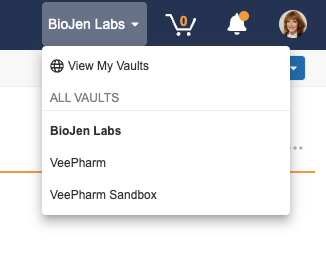
My Vaults menu

If you are logged into a sandbox Vault, it will have a green banner to help you distinguish between your sandbox and production Vaults. Learn more about Administering Sandbox Vaults .

Tasks & Workflows View

Within My Vaults , you can see assigned tasks and active workflows across Vaults. You can choose between grid view (default) or card view using the view icons in the upper right corner. In grid view, you can see a paginated table of all of your Vaults with columns for Vault Name, Last Login, Application Family, Type, Domain, and My Tasks. Additional product-specific product family columns may appear next to the Vault column if you have a Vault membership in certain product families. See the application-specific documentation for more information. In the card view, you see a chart for each Vault of your assigned tasks and their status, as well as the number of available tasks and active workflows. In this view, you can also see the domain name, the time you last accessed each Vault, as well as the application type. Open a specific Vault by clicking various places within the page . From the search results, you can navigate back to the task and workflow view with the Back to My Vaults link.

How to Search Across Vaults

When you search from My Vaults , results include documents in all Vaults to which you have access, including Vaults across domains. Cross-Vault search is convenient when you aren’t sure which Vault a document resides in, or when you want an across-the-board view of all documents matching certain criteria. Headings separate results from each Vault and you can filter documents by Vault from the left panel. If you have access to Vaults across domains, you can filter the search results to display both home and cross-domain Vaults.

From My Vaults , you can click various links to navigate to specific areas within a Vault.

In the task and workflow view:

  • The headings that appear above each Vault’s status direct users to the Home > My Tasks view.
  • The assigned tasks count and graphic navigate users to the Home > My Tasks view.

In the search results view:

  • The Vault headings navigate users to the Library > Recent Documents view.
  • The View all results link opens the search results for a specific Vault.
  • The document name links open the Doc Info page directly.

View, Sort, & Favorites

You can choose different view and sort options in the My Vaults page using the drop-down lists beneath the My Vaults header. The options you select will persist throughout your session, but not into any future sessions.

View Options

In card view, you have the following view options for My Vaults:

  • All My Vaults (default) shows all Vaults that you can access. This option always appears first in the drop-down list.
  • {domain.com} shows all Vaults associated with the selected domain. All domains in which you have access to a Vault appear in the drop-down list in alphabetical order.
  • My Favorites shows only Vaults starred as favorites. This option is always listed last in the drop-down list.

These view options are not available in grid view. Instead, if you have access to more than 25 Vaults, you can filter the Vaults that are displayed by any column except for Vault Name, Last Login, and My Tasks.

Sort Options

In grid view, you can sort by any column except My Tasks. In card view, you have the following sort options:

  • Vault Name sorts all Vaults alphabetically by name.
  • Vault Domain sorts all Vaults alphabetically by the domain name.
  • Last Login Time sorts all Vaults by your most recent login time.
  • Delegated Vaults sorts by Vaults you have delegated access to.

Favorites

In card view, each Vault tile displays a star button next to the Vault name. Click the star to mark the Vault as a personal favorite. To remove it from your favorites, click the star again.

Hover Views

You can hover over the following UI elements for additional information:

  • Delegate icon for Vaults to which you have delegated access (to the left of the Vault Name in grid view or in the upper right corner of the Vault’s card in card view): The information displayed depends upon how your Vault’s configuration, but may include information such as the first and last name, email address, and title of the user who delegated your access.
  • My Tasks: Displays a breakdown of overdue, coming due, and on schedule tasks.

Vault Status

When a Vault is unavailable (Vault in maintenance or configuration mode), it is grayed out and unclickable. In grid view, you can hover over the grayed out Vault name for details on its status.